Hydrovac Excavation in Cambridge, Ontario
Non-destructive digging for the industrial parks, the 401 logistics yards and the old river towns: exposing plant services and process lines, cutting trenches through live yards, and post holes and footings on Galt and Preston lots the river shaped.
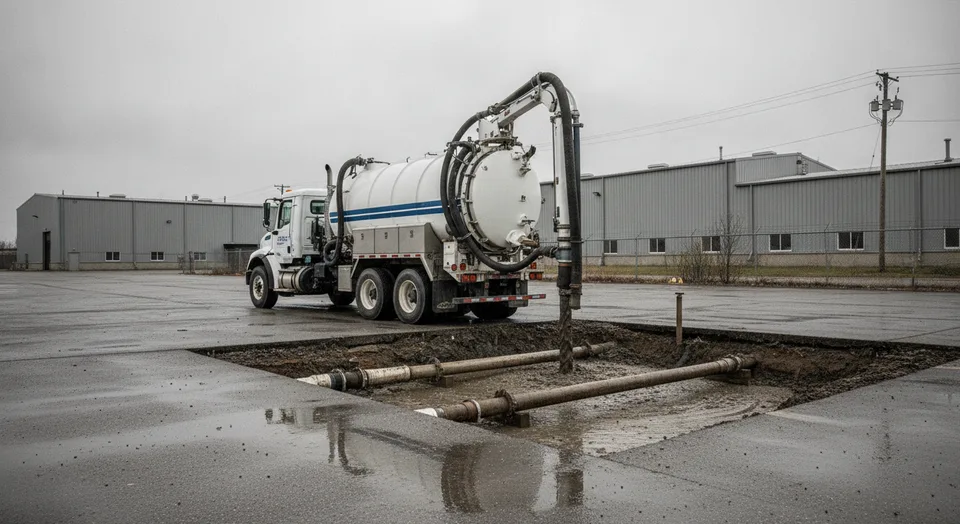
Cambridge digs differently from the rest of the region because so much of its ground is working ground. The industrial parks in Hespeler and along Pinebush and Boxwood carry process piping, compressed air, fire mains, private hydro and fibre under paved yards that have been added to by every tenant since the plant was built, and a fraction of it is on a public locate. The logistics yards along the 401 and Franklin Boulevard are the same story on a bigger scale, with truck traffic that does not stop for an open trench. Then there are the river towns. Galt and Preston sit on the Grand and the Speed, with a century and a half of mill-era services under the downtown streets, river-deposited soils that change within a single lot, and a large share of properties inside a Grand River Conservation Authority regulated area where removing material needs a permit. Hydrovac is how all of that gets opened without stopping a production line or flooding a basement. Water loosens the soil, vacuum lifts it into the tank, and the line is exposed intact. The locate and the plant drawings come first, the slurry leaves in the truck, and the quote says who holds the Highway Occupancy Permit.
Hydrovac Work We Take On in Cambridge
Utility and process line daylighting, slot trenching, pole and post holes, catch basin and culvert cleaning, and pile, caisson and footing excavation, for industry, contractors, the City and homeowners.
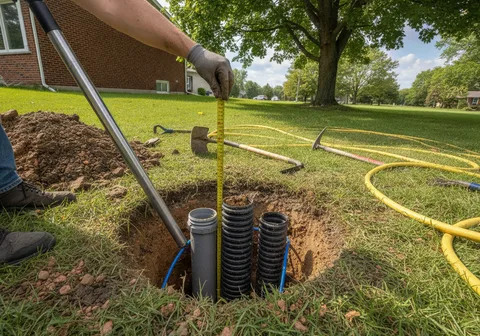
Utility & Process Line Daylighting
Test holes that expose fire mains, process piping, private hydro and fibre, and the public gas, water and telecom at the street, without touching any of it, so a pad, an addition or a drill path is designed around facts.
Learn more →
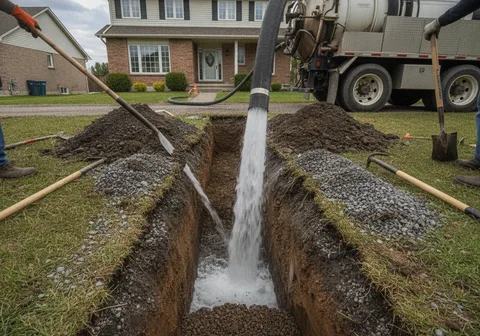
Slot Trenching
Narrow trenches for conduit, compressed air, yard lighting, gate controls and new services, cut through paved working yards and boulevards full of other lines, and plated so traffic keeps moving.
Learn more →
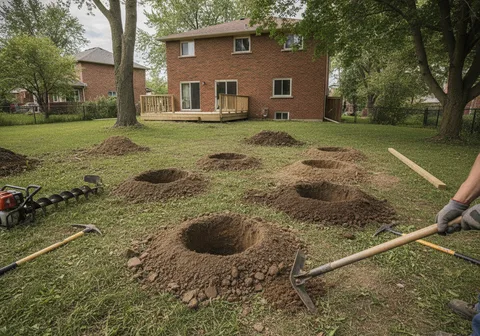
Pole & Post Holes
Clean, straight holes for industrial perimeter fence, yard lighting and camera poles, sign bases, and residential fence, deck and pool enclosure posts, including the holes beside services an auger cannot be trusted with.
Learn more →
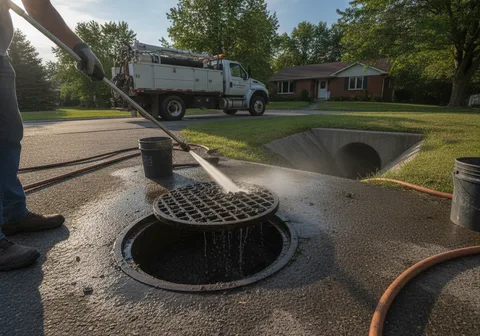
Catch Basin & Culvert Cleaning
Vacuum removal of winter sand, silt and debris from yard catch basins, oil-grit separators, trench drains and culverts on private property, hauled away rather than flushed toward the river.
Learn more →
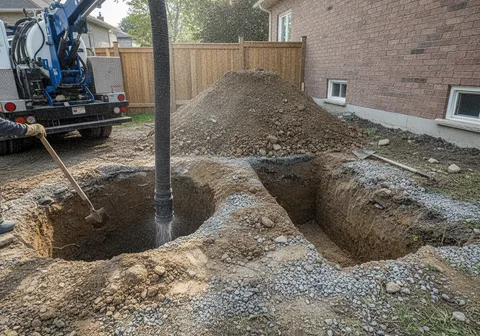
Pile, Caisson & Footing Excavation
Precise excavation for canopy, racking and sign caissons in working yards, helical pile pre-excavation, and residential pier footings and underpinning pits on sites where a machine cannot dig safely or at all.
Learn more →
Hydrovac in Cambridge: Plant Yards, River Ground and the Permit Stack
The public locate, and the private one that matters more in a plant yard. Every dig in Cambridge begins with a locate request through Ontario One Call, which administers the Ontario Underground Infrastructure Notification System Act, 2012. The published standard gives each utility owner five business days to complete a locate; the excavator requests only for a dig within the next 30 calendar days, waits for every owner to respond, checks the paperwork against the marks, and does not dig on an expired locate. In an industrial yard that locate covers the gas main at the property line and the hydro feed to the meter, and very little else. Everything past the meter is the owner's: process water, compressed air, fire protection mains, private transformers and feeders, fibre between buildings, fuel lines, and the abandoned lines of three previous tenants. A hydrovac job in Hespeler or Pinebush assumes a plant drawing review and a private locate alongside the One Call request, and the quote says so. Where the drawings are thin, which is normal in a forty-year-old plant, test holes replace the drawings.
Hespeler and Pinebush: live yards, paved over and added to. The industrial lands north of the 401 along Pinebush Road and Boxwood Drive, and the older Hespeler industrial park off Guelph Avenue and Queen Street, are the core of Cambridge hydrovac work. Yards are paved, services run shallow under the asphalt, and plants operate while the digging happens. The typical jobs are exposing a fire main or process line before a building addition or a new pad, slot trenching for new conduit or compressed air across a yard between production and shipping, caissons for canopy and racking foundations, and emptying the yard's catch basins and oil-grit separators of a winter's sand. Hydrovac is chosen because a bucket strike on a fire main shuts a plant, and because a narrow saw-cut slot through a working yard can be plated and driven over at the end of the shift. Scheduling is built around the plant: night and weekend windows are common, and the truck's position is agreed with the facilities manager so forklifts and trucks keep moving.
The 401 corridor and the logistics yards. Along Highway 401 from Hespeler Road to Townline Road, and down Franklin Boulevard and Maple Grove Road, the distribution centres and truck yards bring a scale problem. Yards are large, services run long distances between buildings and the street, and truck traffic cannot be stopped for a trench. Daylighting ahead of directional drilling for new feeds, slot trenching for yard lighting and gate controls, post holes for perimeter fencing along property lines that carry gas and telecom, and catch basin cleaning across acres of pavement are the common jobs. Work in the municipal right-of-way on the access roads needs a City of Cambridge Highway Occupancy Permit, which the City requires for all work in, over, under, across or along a City right-of-way, with excavating, cutting and trenching named specifically. Notice is three business days for work with no closure, five for a lane closure and ten for a full closure, with a certificate of insurance naming the City and traffic control to Ontario Traffic Manual Book 7. Hespeler Road and other Regional roads are permitted through the Region of Waterloo. Highway 401 itself is provincial, and work affecting it is a different process entirely.
Galt and Preston: mill-era services and river soils. The old downtowns of Galt and Preston sit directly on the Grand and Speed rivers and have been industrial since the mills, which leaves two problems under the streets. The first is history: stone foundations, mill races, abandoned water and gas services, and private laterals that were never drawn, none of which a locate will mark. The second is the ground itself. River-deposited soils change within a single lot, from sand and gravel that cut quickly to silt and clay that hold water and produce heavy slurry, and the water table is close to the surface near the rivers. Hydrovac handles both because it exposes whatever is there without breaking it and because the vacuum manages water in the hole that a bucket cannot. The administrative point is the Grand River Conservation Authority: a large share of Galt and Preston properties fall inside a regulated area under O. Reg. 41/24, where removing material from a site and placing structures count as development that can need a permit. The GRCA's Map Your Property tool answers it for an address in a minute, and on a river-adjacent lot it is checked before the truck is booked, not after.
Slurry: where it goes in Waterloo Region. The truck leaves every Cambridge site with a tank of wet spoil, and the Region of Waterloo's Sewer Use By-law 21-036 settles what may be done with it. Storm sewers may receive only uncontaminated water or storm water, so a yard catch basin is not a disposal point and discharging there is a prohibited discharge that can also reach the river. The sanitary sewer carries a total suspended solids limit of 350 mg/L, which soil slurry exceeds many times over, and the by-law's Temporary Discharge Permits exist for construction de-watering with no other reasonable option, not for spoil. Slurry from an industrial yard may also carry hydrocarbons or other contaminants from the pavement and the ground beneath it, which affects which receiving facility can take it and what it costs. Disposal is its own line on the quote, the number of loads follows hole count, depth and soil, and on a plant site the owner's environmental requirements are followed on top of the by-law.
Serving Cambridge & Surrounding Areas
- Cambridge
- Hespeler
- Pinebush
- Galt
- Preston
- Blair & Ayr
Locates before digging are required under the Ontario Underground Infrastructure Notification System Act, 2012, administered by Ontario One Call, whose compliance standard gives utility owners five business days to complete a standard locate. All work in, over, under, across or along a City of Cambridge right-of-way needs a Highway Occupancy Permit; Regional roads are permitted by the Region of Waterloo. Sewer discharges are governed by the Region of Waterloo Sewer Use By-law 21-036; hydrovac slurry is hauled to an approved receiving facility. Property in a regulated area along the Grand or Speed rivers may need a permit from the Grand River Conservation Authority under O. Reg. 41/24. Footing depth below frost is set by Ontario's Building Code and confirmed for a specific property by the City of Cambridge's building division.
Frequently Asked Questions
Our plant has its own drawings. Do we still need a One Call locate?
Yes. The Ontario One Call locate is a legal requirement for any dig in Ontario and covers the public utilities up to and sometimes past your property line. Your plant drawings and a private locate cover everything past the meter. A hydrovac job in a Cambridge industrial yard uses both, and where the drawings are unreliable, test holes stand in for them.
Can you work while the plant is running?
Usually, and that is a large part of why hydrovac is chosen. A narrow saw-cut slot or a test hole can be cut in a coned-off section of the yard, plated at the end of the window and driven over. Night and weekend windows are routine. The truck's position and the hose route are agreed with the facilities manager so shipping and forklift traffic keep moving.
Do I need a permit to dig at the edge of my lot?
If any part of the work is in, over, under, across or along the City right-of-way, which includes the boulevard and the sidewalk, the City of Cambridge requires a Highway Occupancy Permit, with three to ten business days' notice depending on what is closed, a certificate of insurance naming the City and traffic control to Book 7. Hespeler Road and other Regional roads go through the Region of Waterloo. Work entirely inside your property line does not need it.
What does hydrovac cost in Cambridge?
It is quoted by the hour for the truck and crew, with a minimum, plus slurry disposal per load. Hours depend on soil, depth and hole count, and industrial yards add pavement cutting, plating and off-hours windows. Planning ranges are on the hydrovac cost page; the written quote follows a site review or the drawings.
What is different about digging in Galt or Preston near the river?
Two things. The ground changes within a lot, from gravel to silt, and the water table is close to the surface, so slurry volumes and the time per hole vary more than elsewhere. And a large share of properties sit inside a Grand River Conservation Authority regulated area under O. Reg. 41/24, where removing material from a site can need a permit. Both are checked before the truck is booked.
Can a homeowner book the truck?
Yes. Homeowners in Cambridge book hydrovac for deck and fence post holes on lots where the locate shows services inside the line, for exposing the gas service before an addition, and in the old river neighbourhoods for finding what is actually under a yard before a pool or a footing goes in. There is a minimum charge for travel and setup, so grouping work brings the cost per hole down.
What happens to the slurry?
It leaves in the truck and goes to a receiving facility approved to take it. The Region of Waterloo's Sewer Use By-law 21-036 does not allow it into a catch basin, a manhole or the sanitary sewer. Slurry from an industrial yard may need a facility that accepts potentially contaminated soil. Holes are backfilled with clean material and compacted to grade.
Ready to Get Started?
Call 289-513-1410 or send the form for a written quote for hydrovac excavation in Cambridge.